Showing posts with label Finnish literature. Show all posts

Thursday, March 27, 2014

Should we care about the accuracy of historical fiction?

I’m a historian by education and a voracious reader. However, I don’t read much historical fiction – or watch historical movies, for that matter. Every student of history knows why. The incorrect historical facts and details mar the enjoyment of a good story.

I used to read plenty of historical fiction though, back before I studied history. It’s what got me to studying it in the first place. I was able to immerse myself in the past worlds without a care for the accuracy. I was rather sure, actually, that authors made up most of the details anyway. Not everyone things that way though.

It seems the word ‘historical’ makes readers assume a certain level of accuracy in books. Readers of historical romances, which often are more story-driven and less limited by the accuracy of details, are as unforgiving about wrong details as readers of more serious historical fiction. Readers trust the authors of historical fiction. Georgette Heyer has taught generations of readers and writers about the life in Regency England. Even if there were incorrect details in her books, no one would care at this point; her world is accepted as the truth.

But what about the kind of historical fiction that comes with the authority of academic learning and exhaustive research? The Guardian brought up the issue in a recent column, “How true should historical fiction be?” The writer, author Stephanie Merritt, has a clear view:
novelists are not history teachers. It's not our job to educate people, and if we start using words like “duty” and “responsibility” about historical fiction – or any fiction – we’re in danger of leaching all the vigour out of it with a sense of worthiness.
While authors “have a responsibility to not present readers with deliberately false information about a historical character or period”, the story should come first.

The trouble for an ordinary reader, or even a historian, is that we don’t always know when the author invents characters or events, or adds details simply because they fit the story. Even if readers assume that everything is invented, they can’t help but learn, the narrative helping with the process. And occasionally we learn things wrong.
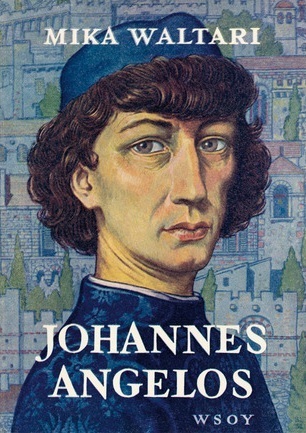

Pretty much everything I know about the fall of Constantinople (1453) I learned from Johannes Angelos (English: The Dark Angel, 1953), a 1952 book by Finnish author Mika Waltari. Finnish literary tradition maintains that he did exhaustive research for his historical novels and that all details are accurate. But he was one of the most prolific writers of his time – of any time, really – so how much time did he actually have for research. His historical fiction is so rich in detail, however, that it takes a dedicated reader or a specialist to detect the inaccuracies. Like with Heyer’s books, the sense of historical accuracy is strong in his books, which trumps all other concerns.

I’ve never really needed what I learned from Johannes Angelos anywhere, so it doesn’t actually matter if I’ve learned something incorrectly. Most of what we learn from the historical fiction is purely for our own enlightenment. Nonetheless, it would be nice to be able to rely on that learning. A reader should know when the author deviates from historical accuracy:
if you are going to play fast and loose with historical fact for the sake of a good story, you'd better have done your research thoroughly if you want readers to take you seriously; only then will you have the authority to depart from those facts.
In the end, even historical fiction is bound by the rules of fiction, not fact, but also liberated by them: “By making clear that you're writing fiction, you claim the freedom to speculate, to stray beyond what is known, and so breathe new life into long-dead characters.”

As all historians know, “any attempt to recreate the past requires a leap of imagination.” This is doubly true for historical fiction. So perhaps I should get over myself and start reading historical fiction again for good stories, not for exercises in my learning. Who knows, I might even enjoy it.

(All quotes from the Guardian article How true should historical fiction be?)

***

I’ve been on an urban fantasy reading binge recently. I’ve read books that were published ages ago, but I haven’t had time for, such as the latest books in Patricia Briggs’s two series. I read Dirty Magic, the first book in a new series by Jaye Wells called Prospero’s War that came out a couple of months ago. All were very enjoyable reads. I read the latest Anita Blake book too, which didn’t reach the greatness of the earlier books in the series, but was much better than the previous book.

This week, I started a new series – new to me, the first book was published in 2006 – called Quantum Gravity by Justina Robson. The first book is called Keeping it Real. It’s urban fantasy set in the near future where some kind of quantum explosion has torn open the borders between various realms or dimensions, forcing humans to interact with elves, fairies and demons. The heroine, Lila Black, is a human cyborg, which makes her a fairly unique character. I’ve read about a third of the book and I like it so far.

I’ve also began to read a collection of short stories by Pete Langman called Black Box. Good, but grim, read. I have a hunch some of the stories may be well beyond my comfort zone.

Thursday, February 27, 2014

The Kalevala

Tomorrow, February 28th, we celebrate our national epic, The Kalevala in Finland. It’s a compilation of 19th century poems collected by Elias Lönnrot (1802-1884). Before him, the poems had only existed in oral form, meant to be sung, but they were already disappearing. Lönnrot saved them and gave them the epic form. The first version was published in 1835. The first English translation is from 1888.

While never my favourite reading, The Kalevala is nonetheless part of my heritage. The stories are interesting. Complete with a creation myth, they depict life in the prehistoric Finland, with tribal clashes, lust, seduction, warfare and magic. It ends with an allegory of Christianity's arrival to Finland. They’re written in a unique Kalevala metric, but personally I like the stories best in prose form.

The Defence of the Sampo by Akseli Gallen-Kallela, 1886.

Here’s a small sample of the second rune, Wainamoinen’s sowing. The translation doesn’t do justice to the rhythm, but it’s the only one I could find.
Straightway rose a form from oceans,
Rose a hero from the waters,
Nor belonged he to the largest,
Nor belonged he to the smallest,
Long was he as man's forefinger,
Taller than the hand of woman;
On his head a cap of copper,
Boots upon his feet were copper,
Gloves upon his hands were copper,
And its stripes were copper-colored,
Belt around him made of copper,
Hatchet in his belt was copper;
And the handle of his hatchet
Was as long as hand of woman,
Of a finger's breadth the blade was.
Then the trusty Wainamoinen
Thought awhile and well considered,
And his measures are as follow:
"Art thou, sir, divine or human?
Which of these thou only knowest;
Tell me what thy name and station.
Very like a man thou lookest,
Hast the bearing of a hero,
Though the length of man's first finger,
Scarce as tall as hoof of reindeer."
Then again spake Wainamoinen
To the form from out the ocean:
"Verily I think thee human,
Of the race of pigmy-heroes,
Might as well be dead or dying,
Fit for nothing but to perish."
Answered thus the pigmy-hero,
Spake the small one from the ocean
To the valiant Wainamoinen
"Truly am I god and hero,
From the tribes that rule the ocean;
Come I here to fell the oak-tree,
Lop its branches with my hatchet."
Wainamoinen, old and trusty,
Answers thus the sea-born hero:
"Never hast thou force sufficient,
Not to thee has strength been given,
To uproot this mighty oak-tree,
To upset this thing of evil,
Nor to lop its hundred branches."
Scarcely had he finished speaking,
Scarcely had he moved his eyelids,
Ere the pigmy full unfolding,
Quick becomes a mighty giant.
*** 

Since last week, I’ve finished reading The Golem and the Djinni, and Do Unto Others. Click the names for my reviews of them. I enjoyed both books immensely. However, The Golem and the Djinni left me a little sad, and Do Unto Others mightily frustrated, like only short stories can. But both were well written, wonderful stories that I warmly recommend for everyone.

This week, I’m reading Wicked Business by Janet Evanovich. I have no excuse, other than wanting to give the series another try. There isn’t a third book in the series that I know of, perhaps mercifully so. The book is mildly entertaining, but it’s nowhere near the delightfulness of some of her earlier books.

Thursday, October 10, 2013

Honouring the national literature


October 10th is the Aleksis Kivi Day in Finland. Kivi (1834-1872) was the first Finnish novelist to write in Finnish, which earns him the title of the National Author. Until him, Finnish was regarded inferior and unsuitable language for literature; the cultural elite came from the Swedish-speaking minority so the earlier Finnish literature is written in Swedish.

Seven Brothers (1870, Seitsemän veljestä in Finnish), the book that transformed Finnish literature, is his only novel; the body of his work consists of plays and poems. It’s the only work of his that I’ve read too, and I didn’t read it voluntarily. It was part of the school curriculum and, like all schoolwork, felt like a chore. I didn’t think I needed to read it anyway, because I knew what the book was about, having had seen at least two stage productions and a TV-series based on it.


In the end, I’m glad that I didn’t take the easy way out, because it’s a good book. For such a momentous book in Finnish history, it’s easy to read too, both fun and poignant. As the name reveals, it tells a story of seven brothers who live simple life in their country village, farming their land, minding their business. However, the modern world disrupts their lives in the form of the church and its demand the brothers learn to read if they want to be part of the society – especially if they want to marry. It doesn’t go well and, thoroughly incised, the brothers flee in the middle of an untouched forest – there were a lot of those still left in Finland – to start a new life unharrassed by demands they couldn’t meet. Eventually, though, civilisation wins and the brothers return home and become well-respected members of their society.

It’s a story about the transformation of the society that happened in Finland during the 19th century. The brothers represent the old, rural world. Simpler world. That doesn’t mean the brothers are simple or that the book is. Each brother views the world in their unique way and watching it through their eyes offers a lot to a modern reader. Especially their views about nature and living in harmony with it would be understandable today too.

We had to pick a favourite brother and write a report on him. Mine was Lauri, a unique thinker and an artistic soul. He must have felt like a kindred spirit, an introvert like me. Unfortunately, I can’t remember what I wrote. I got a good grade, though, and we all know that’s what counts. Right?

I haven’t picked the book since, but I’ve seen some productions on TV and read a children’s picture book version of it quite a few times. None of these diminish the value of the original. They add to it. It is, quite simply, a well-loved piece of our literature and will mostly likely remain so too.

Seven Brothers is available in English, but I havent seen the translation and cant tell if its any good. However, I found this video of some summer theatre production of the play based on the book. Its in Finnish, but for some reason it manages to convey a lot about the spirit of the book, the wildness of the brothers especially. The scenes arent in any particular order, theyre just glimpses into the play.


Tuesday, July 09, 2013

Discovering treasures


I’ve been holidaying for a couple of weeks, hence the gap in posting. I visited my sister, among others, who lives in a small country parish that nonetheless has a nice little library. The library was selling old books with a very reasonable price: one could fill a plastic bag with books for two euros; they provided the bag. Who could resist?

The selection wasn’t huge – it was a small library, after all – but there were, for example, old leather-bound editions of classics. They were tempting, but I knew I wouldn’t read them and I only have so much room on my shelves. So, heroically, I resisted. My sister, a teacher, wasn’t as strong and she filled most of our bag with material she thought she could use in her teaching.

Since the bag was almost full now, it was easier to concentrate on books that I would actually read. So I picked a book I had loved as a preteen, but hadn’t come across since. My best friend had won a copy on some school related competition and she let me read it; I, in turn, borrowed it to my sister who remembered it fondly too. Unsurprisingly, as seems to be the theme of this blog, it was a fantasy book, written especially for – maybe – under-fifteen-year-olds. It’s by a Finnish author Aila Meriluoto and, unfortunately, only available in Finnish.


The book Vihreä tukka (Green Hair), published in 1982, tells a story of Eintel, a girl with a green hair her grandmother dyes and covers with a scarf so that no one in the country with an oppressive regime would find out she has some fairy blood in her. She thinks she’s the only one of her kind in the world, but then discovers the fairies. 

It’s a very lyrical and beautiful fairy-tale, a story of acceptance and a romance too; Eintel falls in love with a fairy boy. Fairies are the good creatures in the story; Eintel's human world is that of fear, so it surprised me to later learn that in general fairies are considered creatures that can’t be trusted. The influence of the book was so strong, long after I’d forgotten the story itself. I look forward to reading it again, to find out if it’s as good as I remember.

We got other books too. My husband found The Space Merchants by Fredereik Pohl and C. M. Kornbluth, which it turned out we already had, but he didn’t mind. And I bought Jack Kerouac’s On the Road, though I can’t really say why. Because it was there, perhaps. Maybe I’ll even get around to reading it one of these days. But for now, I think I’ll read some Jude Devereaux I also got, because – hey – it’s summer.

Wednesday, June 12, 2013

Lessons in life in children's books


The importance of reading as a child was made clear by the new British Children’s Laureate, Malorie Blackman. She told in an interview how her father thought reading fiction was useless and how she read it despite, learning, as she said, “more about people and relating and communicating with other people through fiction books than I ever did through non-fiction.” When I shared the interview on Twitter, one person told me that he had learned about black culture for the first time through Blackman’s books. And those lessons had stuck. A child’s mind is very flexible and impressionable so what we read as a child makes an impact for life. If we’re lucky, the impact is positive, the lessons learned those that make us better people.

There wasn’t any racial diversity in my country when I was growing up so there wasn’t literature for children about it either. Instead, children’s books addressed social issues like growing up with a single parent, though I was an adult before I understood that aspect of those books. Nevertheless, the lesson learned; I can’t remember ever wondering why some of my friends didn’t have two parents.

Some books taught me about empathy, for example. At seven, I read a series about a girl who had to face the horrors of two wars between Finland and the Soviet Union (1939-44). She had to twice leave her home village on what eventually became the Soviet side of the border and relocate among people who didn’t really want all the refugees they now had to deal with. While written especially for children, it was heavy reading for a small girl. However, I learned immensely from those books and three decades later, when reading about refugees of any war, the books and the emotions I felt when reading them still return to me.

One series is above all else, however, when it comes to learning about being different and accepting people as they are: the Moomin (1945-1970). Their author, Tove Jansson (1914-2001), was a member of two minorities. She was a Swedish-speaking Finn (about 10% of population in her youth) and she lived in a same-sex relationship at the time when they weren’t acknowledged socially or legally. She was also an artist. While the cultural elite in her youth consisted mostly of the Swedish-speaking Finns, giving her slightly better chances at becoming an artist, it still wasn’t an easy career choice for a woman.

Moomins were first created as a diversion from the horrors of the war, which explains some of the tone, although the characters got their inspiration from Jansson's family. They are trolls with big snouts and pretty tails who live in the Moomin Valley, a peaceful place away from everything. Their big house is always open for friends and a wide cast of characters visit them constantly, each quirkier than the other. Everyone is accepted as they are, the scary ones included, and even the silliest find understanding in the end. The lifestyle of the Moomin family is rather bohemian; they head on adventures on a moment’s notice and show fondness for good Whisky. They’re anarchic too, defying authorities at every chance.


Despite the idyllic settings, the Moomin books aren’t exactly light reading for children. From the more easily understood lessons like ‘always be kind to others’ they stretch to handling natural disasters and the end of the world. I was especially impressed with Comet in Moominland, which I read when I was about seven. In it, a great comet threatens the Moomin Valley, the tone of the book that of immediate doom as the comet comes nearer. There are portents along the way, and even the cover is scary. It didn’t surprise me in the least to learn – as an adult – that the book is thought to be a commentary on the atomic bomb. As a child of the Cold War, the fear I experienced reading the book was the same I felt about the nuclear threat. The book allowed me to process that fear.

The Moomin books were written at a time when books for children could handle truly difficult issues, like death. Nowadays, the trend is different. When the Moomin characters were turned into a Japanese animation in the 1990s, everything controversial was cleaned away. The series is beautiful – and lifeless. If it’s the first encounter one has with the Moomins, one will never learn all about them. And while the animated series most likely creates a beautiful childhood memory, it won’t teach you the life lessons the books do. Moreover, it won’t make you grow as a human. Luckily, the books are still there.

Here's a snippet from the animated Moomin series. You can find most of them in English on YouTube.