The Invisible Library series truly matures
in this fifth book, The Mortal Word. The story-line that began in the previous
book about the peace conference between the fae and the dragons continues, with
extremely high stakes. A murder has taken place, which threatens the
negotiations, and Irene, with her friend Detective Vale, is called in to
investigate. The plot is complicated, with multiple suspects who all seem
plausible from the beginning. Even the Library is implicated, which causes
Irene a great deal of worry. She has to use all her skills and ingenuity to
bring clarity to the situation. Luckily, she has by now enough experience of
both dragons and the fae to pull it off.
Irene has learned a lot during the
course of the series and grown in strength. I’m not sure, however, that she has
grown as a person all that much. The focus of the books has always been on the
action, leaving character development to a backburner. For example the
revelations concerning Irene’s parents were staggering to her, yet the one time
they are present in the same world, she doesn’t even meet them. I found that a
really odd turn of events.
Lack of character growth is
especially true when it comes to side characters, Kai the most important among
them. He is only described from Irene’s point of view, and the few chapters
there have been in his point of view have concentrated on action. He still very
much comes across the way Irene first pictured him, as an immature young man,
and the attempts to give him some depth in the past couple of books haven’t
really worked. I had hoped that now that he is no longer Irene’s apprentice, he
would mature a little, but he was absent for much of the book, and so that didn’t
happen. The few times Irene concerns herself with him and his feelings, she
feels pity or fear for him, which I find to be the emotions of an older sister
or a mother, or the teacher she was.
This reflects on the romantic
relationship, too, that has been building between Irene and Kai. The reader is
supposed to understand that the two are falling in love—or at least developing some sort of feelings—but the one time that there was room for it in the book,
the door closed before anything happened. And I don’t mean I required a
description of the bedroom action. I wanted the romance that preceded it.
Unfortunately the reader isn’t given access to it, which makes the entire
romance feel unreal. I hope this improves in books to come.
Other minor characters, even the
recurring ones, remain fairly two-dimensional too. The villains of the piece
were given much more depth, which obviously improves them greatly. The fae
especially are interesting with their affinity to stories and tendency to
formulate themselves according to them. With impressive villains, the final
battle is impressive too, and the solutions aren’t easy, especially since Irene
has a tendency to handle everything herself. Maybe one day she’ll learn to
delegate.
This book ends with a new chapter
beginning in Irene’s life that promises to be interesting. I’m eagerly looking
forward to the next book in the series to find out how that turns out.
It’s been five years since I’ve posted on this blog, and I
think it’s time to revive it. I haven’t stopped reading, or reviewing books; I just
published the reviews on my other blog, Susanna Writes. I’m not entirely sure
writing two blogs is sensible, but I’m about to give it a go—again—anyway. It’s one of those things that make sense at the beginning of a new
year. So here goes.
It’s been my habit for the past couple of years to write a
list of books that I hope to read at the beginning of the year. There are so
many books being published, that it’s hard to keep track of them all. With a
list, I’ll at least remember the most interesting ones. So far, I haven’t once
read everything on the list, as I keep reading outside it, but it’s worked well
otherwise. If you want to know what I read last year, here’s a post I wrote on
my other blog (although, in hindsight, I should probably have published it on
this one).
This year, I pledged to read sixty books in Goodreads Reading Challenge, meaning that I should read five books a month. For the past
two years, I’ve read fifty-five books a year, so I’m not entirely hopeful that
I’ll be able to do it, but it won’t be for the lack of reading if I don’t.
The list for 2019 has sixty-nine books. Fifteen are
transfers from the previous list, eight of which were already on the list
before that one. Only the books that I really think I want to read, even if I
didn’t find time for them before, made it to this year’s list too. Thirteen books
are published this year, and they mostly belong to ongoing series by my
favourite authors. The rest are mostly books that I already own, but haven’t
got around reading, or belong to series that I haven’t managed to catch up with
yet. I even went through my Kindle to see what gems I had hidden there, and
added them on the list.
My list is heavy on urban fantasy and fantasy: thirty UF
books and nineteen fantasy books. That pretty much reflects my reading habits
in general. Everything else is genre fiction too; it’s seldom that I read
literary fiction these days. There are ten sci-fi books that I want to read,
but only one contemporary romance, which is odd, considering that I write them
myself, but those tend to be the books that I add on my list as I come across
them. Here are some of the books that I’m especially eager to read this year, in
no particular order.
Summoned to the Thirteenth Grave by Darynda Jones. This is
the last book in her Charley Davidson UF series of a grim reaper that I absolutely love, so it’s with part
eagerness and part dread that I wait for it to come out. The publication date
is January 15, so not long to wait anymore. And then it will be over. Forever.
Vicious and Vengeful by V.E. Schwab. I love everything she
writes, and I expect to find these two books exciting too. I got the first as a
birthday present last year, but then waited to read it until I had the second
book too, which I got for a Christmas present. So those go to the top of my
reading pile.
Wolf Rain by Nalini Singh is the latest in her long Psy-Changeling
paranormal romance series. There hasn’t been a weak book yet, so when it comes
out in June, I’ll be reading it instantly. And she’ll probably publish other
books this year too that aren’t on my list, and I’ll be reading all of them
too. This one doesn’t have a cover yet.
The Savior by J.R. Ward is another auto-buy. It’s the book
seventeen in her Black Dagger Brotherhood UF series of vampire warriors, and each book has been excellent.
She’s publishing other books this year too, and all will go on my list. The
first of those is Prisoner of Night, which is set in the same BDB world,
and is published next week.
The Wicked King by Holly Black is the second book in her
Folk of the Air series of fairies and humans living among them, and it’s
published January 8. The first book was exciting, and I expect the follow up to
live up to its predecessor.
Empress of Forever by Max Gladstone is a space opera
published in June. I’d hoped there would be a new Craft Sequence book, because
the next one can’t come fast enough, but I’m sure this will be great too.
Another book by him that I’m waiting for, written with Amal El-Mohtar, is This is How You Lose the Time War that comes out in July. I’m
not exactly sure what genre that one belongs to, but it has everything, spies, time-travel,
and love.
Brave the Tempest by Karen Chance is
the latest in Cassandra Palmer UF series. It’s been too long since the previous
book and this one can’t come fast enough. Until then, I can return to her UF
world with Siren’s Song, a shorter story, which doesn’t have a publication date
yet, but should come out soon.
That’s just a small sample of what’s
to come. I also look forward to reading Atlas Alone by Emma Newman, fourth book
in her Planetfall series, Exit Strategy and Rogue Protocol by Martha Wells, which
belong to her Murderbot Diaries series, and Raven Tower, the new Ann Leckie
book. And, truly, all books on my list are those that I want to read. It’s just
that occasionally I have to prioritise.
The first book of the year has been
selected already too. That’s The Mortal Word by Genevieve Cogman. It’s the
fifth book in her Invisible Library series, and so far it’s very good. I’ll write
a review once I’m finished. Until then, let me know what you’ll be reading this
year.
I was upset over a
one-star book review today. It wasn’t even for my book. It was for a book I had
read and enjoyed and given four stars to. A book that deserved better.
One-star reviews aren’t
exactly rare, and they aren’t always fair. They aren’t something to get upset over in general. But I was upset with this one.
The review is actually
fairly positive. The reader thinks the book was well written and interesting,
and even recommends it to others. But the reader didn’t understand the book.And because of this personal failure, the book
only merits the lowest mark.
And that’s what upset
me. I find the idea peculiar that a book should be understood in order to be
good.
Sadly, I don’t think
the reviewer is alone in the notion that a book should be easy to understand. We
want our books to have plots that move on well-defined paths we can follow –
and anticipate. We want the satisfaction of a story that fulfils our
expectations. Genre fiction reigns supreme for that reason alone. If the book
doesn’t meet our expectations, the book is to blame. And if we don’t understand the book, it’s not our intelligence that is lacking. It’s the book’s fault.
I like genre fiction
just as much as the next reader. I write books that are easy to understand.
Occasionally, though, I like to challenge myself. I pick a book outside my
comfort zone and try to make sense of a more alien narrative. I don’t always
like those reads. I don’t always finish them. It is seldom, however, that I
blame the book for it. And so I don’t really have sympathy for a reader who
faults a book because it’s too difficult.
But readers who want
to be challenged by their reading are in minority. Markets for literary fiction
dwindle as readers prefer easier books. In a free market economy that would
eventually lead to literary fiction disappearing completely. Luckily, there are authors who go against the
markets and write books that aren’t easy. That way there will be something to
read in the future for those who aren’t afraid to exert themselves.
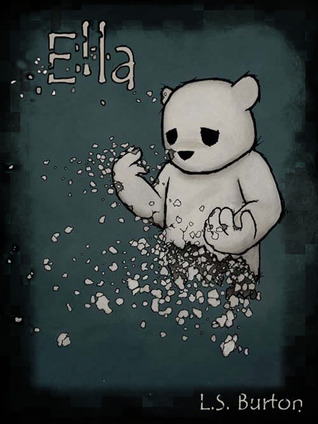
Here’s a link to the book, in case you’d like to read something different (for UK readers here). Ella is a short novel, so
it won’t strain you unnecessarily. And, quite frankly, it isn’t that difficult.
But it is interesting.
I read a couple of
great young adult/middle grade books during my holidays. The Glass Republic, the
second book in Tom Pollock’s Skyscraper Throne urban fantasy trilogy, and the
first two books in Gail Carrigher’s Finishing School steam punk series, Etiquette and Espionage, and Curtsies and Conspiracies. On the surface, they’re very
different series. Pollock’s is a dark and gritty story that doesn’t shy away
from difficult topics, and Carriger’s is light, witty and full of humour.
But they have much in
common, a female protagonist and a very imaginative and unique world-building
among the most obvious. Pollock’s series is set in modern day London and Carrigher’s
in Victorian time, but a young girl's steps towards adulthood and growing pains are universal themes regardless of the time and place.
Both series handle the
themes of prejudice and acceptance. In The Glass Republic the protagonist, Pen,
is trying to recover from torture she suffered in the first book. Her face
marred with ugly scars, she finds it difficult enough to look herself in the
mirror, let alone face her peers who are not compassionate. Matters only get worse when she is thrown into a mirror world where she is constantly
stared at and admired for her uniqueness, as symmetry and unblemished
countenance are found shameful.
In the Finishing
School series, Sophronia has it easier. She is looked down on because of her
background, but in general she fits in fine. The spurned other is the
supernatural creatures, vampires and werewolves. That one of the main
characters is black – fairly rare in Victorian London – seems almost
superfluous and like an afterthought in this context.
Common themes for many
young adult books are finding love and exploring sexuality, but neither of
these series put a great emphasis on those. Sophronia, being a fourteen-year-old
Victorian girl, is oblivious to latter and only vaguely aware of the first.
When she has romantic feelings, her greatest concern is whether the person is
socially acceptable or not. While romance isn’t the driving force of the series,
Sophronia’s interest in a black working class boy will make things difficult
for her in the books to come.
Pen is faced with
similar difficulties. There are so many things she has to take into
consideration; her Muslim faith and her parents’ wishes for a suitable spouse,
and the dictates of the mirror world that is as class conscious as Sophronia’s
Victorian society. In the end, she goes against everything and her self-image
when she falls for a girl – more acceptable in the mirror society than the fact
that she comes from a lower class.
Both series are
immensely enjoyable in their different ways. Their rich worlds and imaginative
plots, the drama in Pollock’s series and comedy in Carrigher’s kept my interest
throughout, and ensure I’ll be reading the upcoming books too.
And I’m not ashamed to
admit it.
In June, Ruth Graham
wrote in Slatehow adults “should feel embarrassed” when what they’re reading is
written for children. Not because the books are bad – she discards the
obviously bad books and concentrates on those with literary merit. She objects
to them because their (adult) readers “are asked to abandon the mature insights
… that they (supposedly) have acquired as adults.”
Graham shows curious
lack of empathy. I think our different perspective is precisely what makes
young adult books enjoyable. Like with any books we read, we can put ourselves
in someone else’s shoes and experience life from a different angle, for however
briefly.
In that, a teenager’s
perspective isn’t any worse or less valuable than an adult’s. We can learn
something of ourselves just like we do when read about ‘mature’ characters. It
can be even more valuable for someone who has adapted to the dictates of the
mature society to see things like a child would.
Graham rejects YA
fiction because she sees it merely as “escapism, instant gratification, and
nostalgia”. It’s all that, but I don’t see them as bad things. Nostalgia is
necessary for humans from time to time. It puts our present and future into
perspective. With YA fiction we can relive the bitter pain of the first crush
without the emotional upheavals and insecurities of the actual teenage, and
feel good knowing that whatever happens, we don’t have to return to that again.
Moreover, YA fiction is not alone in pandering to easy emotions. Adult genre
fiction does the same, its popularity a proof that readers actually want escapism
from their books.
However, the biggest
crime of the YA fiction is, in Graham’s opinion, that it lacks the “emotional
and moral ambiguity of adult fiction – of the real world”. Neither of the series
that I read can be said to be realistic. That doesn’t mean they don’t represent
reality. The themes are real and they are treated as multi-dimensional.
Pollock assumes that even younger readers are capable of seeing the world in
other shades than black and white, and Carrigher has created a school where
young children are taught the morally ambiguous skills of espionage and
assassination.
I have no idea how to
defend YA fiction – or any fiction for that matter – against the accusation of not
being ‘of the real world’. In real world, and apparently in fiction based on
it, there are no happy endings, and so “adult readers ought to reject [YA
fiction] as far too simple”. In Graham’s
opinion, adults should be adults in everything they do. But the definition of
adulthood has changed.
There is a trend in
modern society of postponing the adulthood. People well in their thirties do
not see themselves as mature. They don’t want to grow up, if it means giving up
things that they’ve enjoyed doing since childhood. Reading young adult fiction
with its “uniformly satisfying” endings could merely be a symptom of that
trend. Whether this is good or bad can, of course, be argued over. But I doubt that reading realistic fiction will make anyone mature faster.
The oddest of Graham’s
notions is, however, that adults who read YA fiction rob teenagers a chance of
moving to the ‘grown-up’ fiction. I don’t even know how that could be possible.
There is no natural path that guides readers from one type of books to another,
and from one age group to another. Books from different times, genres and
literary ambitions coexist for anyone to find and read. Adults who read YA
fiction do not make teenagers blind to other books. Moreover, just like adults
want to return to their youth, teenagers have a need to experience the world of
adults. They will discard YA books far faster than the adults who read them –
perhaps to return to them later.
I don’t read YA
fiction exclusively, nor do I read all of it. But I won’t discard good books
merely because of my physical age or my assumed stage of maturity. I won’t
limit myself to books suitable for my age either. I don’t need fiction to
constantly remind me that life is hard. And I won’t be ashamed of sometimes
wanting to forget it, be it with the help of young adult or some other escapist fiction.
That in mind, let me
remind you that Our Lady of the Streets, the last book in Pollock’s trilogy will
come out in August, and Waistcoats and Weaponry, the third book in the
Finishing School series, is published in November. And Graham’s article can be read here.
It’s been a long while
since I posted on this blog. I’ve no excuses, other than being busy with my
latest book. However, that’s been out for two weeks already, and still I haven’t
written anything.
I’ve spent most of my
time – spare and that which I could ill spare – catching up with my reading.
Quite a few great books have come out this past year that I haven’t had time to
read. And new ones are published all the time, adding to my reading pile – or making
it impossible to shorten the pile as I tend to jump to the newest publication.
Last weekend it was
the latest Charley Davidson book that captured my interest. Sixth Grave on the
Edge by Darynda Jones was officially published yesterday, but my favourite
bookstore had it on display already on Saturday, so of course I had to get it
immediately. And I had to read it instantly too, so that I could finish it before
it was officially published. Don’t ask why that matters. It just does.
My favourite bookstore
often has new books on display before they are officially published. They receive
the books well in advance so that they can be ready on the actual day. It
probably works well for them to put them on sale early too, especially when it
comes to popular series. I can’t be the only customer who browses the shelves
for an occasional early bird.
There’s another thing lures me
to the store too, a ‘Paperback Passport’ as they call it. I get a stamp for
every paperback I buy and get the tenth book free. Every time I’ve filled one
and got my free book, I make a decision not to start another one. I have shelves
overflowing with books as it is. And every time I take a new passport anyway. I
started a new one in March and already I’m only two books short of a free book.
How did that happen?
Despite my decision of
buying eBooks to save space, I still buy physical books. Little perks like
early access and free books keep me buying them even though many eBooks are
cheaper than physical ones. A free book is a free book, even though I spend
more money earning it than I would if I bought the same books as eBooks.
But it’s not just
perks that lure me to bookstores. I like books, plain and simple. A book is a
beautiful object. I like how they feel, and how they smell too. So, despite my
decisions, books will continue to lure me, not just for their contents, but as
physical objects too.